Steam Deck 2 is not expected to be a small yearly refresh, and that is probably the right call. Valve has already improved the original idea with Steam Deck OLED, but a true successor needs a bigger reason to exist: more performance without worse battery life, and a design that feels easier to hold for long gaming sessions.
For many players, the first Steam Deck proved that PC gaming can work surprisingly well on a handheld. The next challenge is different. Valve does not only need to make a faster Steam Deck. It needs to make one that feels less bulky, less tiring, and more natural to pick up every day.
The Steam Deck 2 Problem Is Not Just Performance
Most conversations about a new handheld PC start with the chip. How powerful will it be? Will it run newer games at higher settings? Can it push better frame rates? Those questions matter, but they do not cover the full handheld experience.
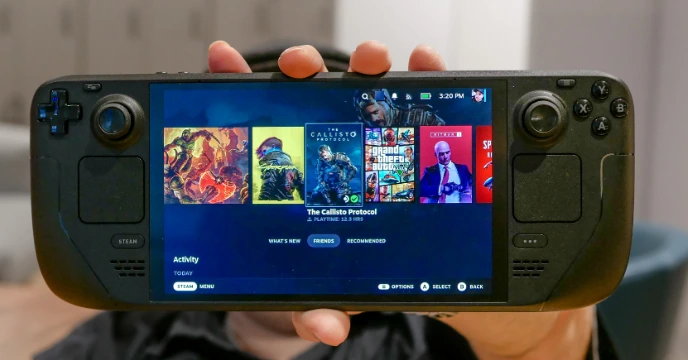
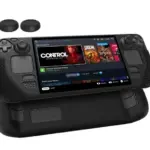
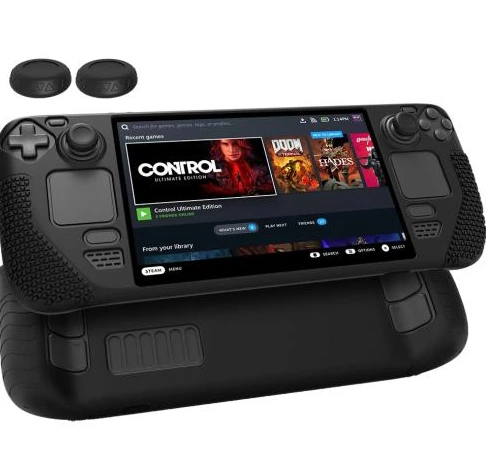
The original Steam Deck already showed the trade-off clearly. It can play a huge PC library, supports SteamOS, handles cloud saves well, and offers a console-like layer over a PC platform. Yet it is still a large device. The LCD model weighs roughly 669 grams, while the OLED model reduced that to around 640 grams. That is manageable on paper, but it becomes noticeable when you play in bed, on a sofa, on a flight, or while holding the device without resting your arms.
Steam Deck 2 will need a meaningful performance jump, but comfort may decide whether people use it daily or leave it docked, shelved, or replaced by a lighter device.
Why Weight Matters More on a Handheld PC
A gaming handheld is not judged like a laptop. A laptop can be heavy because it sits on a desk. A desktop can be massive because you do not hold it. A handheld has to live in your hands.
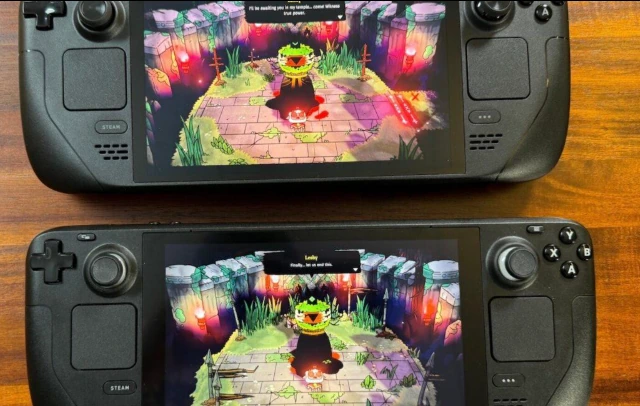
That changes the entire design problem. A few hundred grams can decide whether a device feels portable or tiring. Weight also matters differently depending on where it sits. A well-balanced heavier handheld can feel better than a lighter device with awkward grip angles, but there is still a limit. If your wrists start compensating after 20 minutes, the hardware is fighting the game.
This is where Steam Deck 2 should improve. A slightly thinner body, smarter internal layout, lighter materials, better weight distribution, and improved grip shaping could make a bigger everyday difference than a headline performance increase.
A faster handheld that feels uncomfortable still becomes a device people admire more than they use.
Steam Deck vs Switch 2: Different Devices, Same Comfort Question
The comparison between Steam Deck and Nintendo Switch 2 is not perfect. Steam Deck is a handheld PC built around a broad PC library, while Switch 2 is a console with a more controlled hardware and software environment. Still, buyers compare them because both compete for the same hands, bags, couches, flights, and late-night gaming sessions.
Switch 2 weighs about 534 grams with Joy-Con 2 controllers attached. That is still not tiny, but it is noticeably lighter than Steam Deck OLED. The original Switch was lighter again, which is part of why it felt easy to carry almost anywhere.
Valve does not need to copy Nintendo’s approach. Steam Deck 2 will always need more cooling, more controls, a larger internal board, and a different power profile. But the comparison shows why handheld design cannot be reduced to raw capability. A device can be technically superior and still lose casual usage time if it feels too large to grab quickly.
Ergonomics Can Help, But Bulk Still Has a Cost
Not every large handheld is uncomfortable. Some devices use bigger grips to spread pressure across the palms and reduce finger strain. A thicker grip can make analog sticks and triggers easier to reach. It can also make the system feel more like a real controller instead of a flat tablet with controls attached.
That is the argument for chunky handheld PCs. Power needs cooling. Cooling needs space. Bigger batteries need volume. Full-size controls need physical room. If Valve made Steam Deck 2 too thin, it could sacrifice thermals, battery life or repairability.
The goal should not be “make it tiny at any cost.” The better target is controlled bulk. Steam Deck 2 should feel solid without feeling oversized. It should keep the comfortable controller-like grip of the original while trimming unnecessary thickness and improving balance.
A handheld can be large. It should not feel like a workout.
Battery Life Is the Reason Valve Is Waiting
Valve has been cautious about a true Steam Deck successor, and that caution makes sense. A Steam Deck 2 that is only slightly faster would disappoint owners who bought the LCD or OLED models. A successor should feel like a generational step, not a spec-sheet refresh.
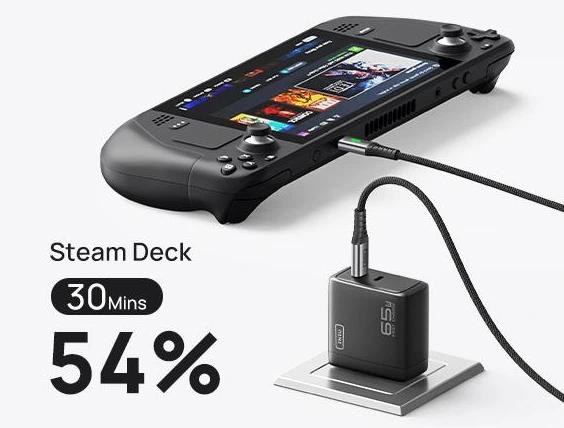
The hard part is battery life. More performance is easy to ask for and difficult to deliver in a handheld. If the next chip draws too much power, Valve would have to use a larger battery, louder cooling, lower clocks, or accept shorter play sessions. None of those options feels like a clean upgrade.
That is why Steam Deck 2 should arrive when performance per watt improves enough to matter. The right leap is not simply “new games run faster.” It is “new games run faster while the device stays quiet, cool, and practical.”
That balance is the entire handheld PC challenge.
OLED Was a Good Refresh, But Not a Full Successor
Steam Deck OLED already solved several problems without becoming Steam Deck 2. It brought a better display, higher refresh rate, improved battery capacity, Wi-Fi 6E, and lower weight compared with the LCD model. It also made the device feel more polished.
But it did not change the fundamental shape of the product. It is still recognisably the same class of handheld: wide, substantial, PC-focused, and built for players who accept size in exchange for flexibility.
That is why Steam Deck 2 has room to feel more ambitious. The next version should not only upgrade the internals. It should revisit the shell, cooling path, screen borders, grip shape, trackpad placement, button feel, and the way the device sits in smaller hands.
Valve does not need to abandon what worked. It needs to refine the parts that made some owners use the device less than they expected.
What a Better Steam Deck 2 Design Should Prioritize
A strong Steam Deck 2 design would start with comfort, not only benchmarks. The display can stay large, but slimmer bezels could help reduce the footprint. The grips should remain supportive, but the weight should sit closer to the palms rather than pulling outward. The cooling system should avoid hot spots near common hand positions.
Controls matter too. Steam Deck’s trackpads are one of its signature features, especially for PC games that were never designed for controllers. Removing them would weaken the device’s identity. The challenge is to keep those controls while making the front face feel less crowded.
Storage and repairability should also stay part of the Steam Deck philosophy. One reason players respect the device is that it feels less locked down than many consoles. Steam Deck 2 should not become sleeker by becoming hostile to maintenance or upgrades.
The best version would be lighter, cleaner and more refined, but still unmistakably a Steam Deck.
A Clamshell Steam Deck 2 Sounds Fun, But Unlikely
Some handheld fans like the idea of a clamshell Steam Deck 2, partly because older handhelds and modern niche devices show how protective and portable that shape can feel. A folding design protects the screen, fits better in bags, and gives the device a stronger “take anywhere” identity.
For Valve, though, it would be a risky move. A clamshell design adds hinge complexity, changes cooling requirements, limits internal layout, and could make the device thicker. It may also interfere with Steam Deck’s existing control layout, especially the trackpads and full-size sticks.
That does not mean Valve should ignore the lesson. The lesson is not “make Steam Deck 2 fold.” The lesson is that form factor affects usage. If a device feels easier to carry and safer to throw into a backpack, it gets used more often.
Steam Deck 2 can learn from that without copying it.
The Real Upgrade: Making Players Reach for It More Often
A new Steam Deck will be judged by performance, but its long-term success will be judged by habits. Do people pick it up for 20 minutes? Do they carry it outside? Do they finish games on it? Do they use it away from the desk, or does it become another impressive gadget that mostly stays near a charger?
That is why weight and comfort deserve to sit near the top of the Steam Deck 2 wishlist. Valve has already proved that PC gaming can work on a handheld. The next step is making that experience feel less like carrying a small PC and more like using a mature portable gaming system.
For Steam Deck 2, the dream upgrade is not only more frames. It is a device that keeps Steam Deck’s power and openness, but feels easier to hold, easier to pack, and easier to love every day.